
What Is Frozen Shoulder Diagnosis And Treatment
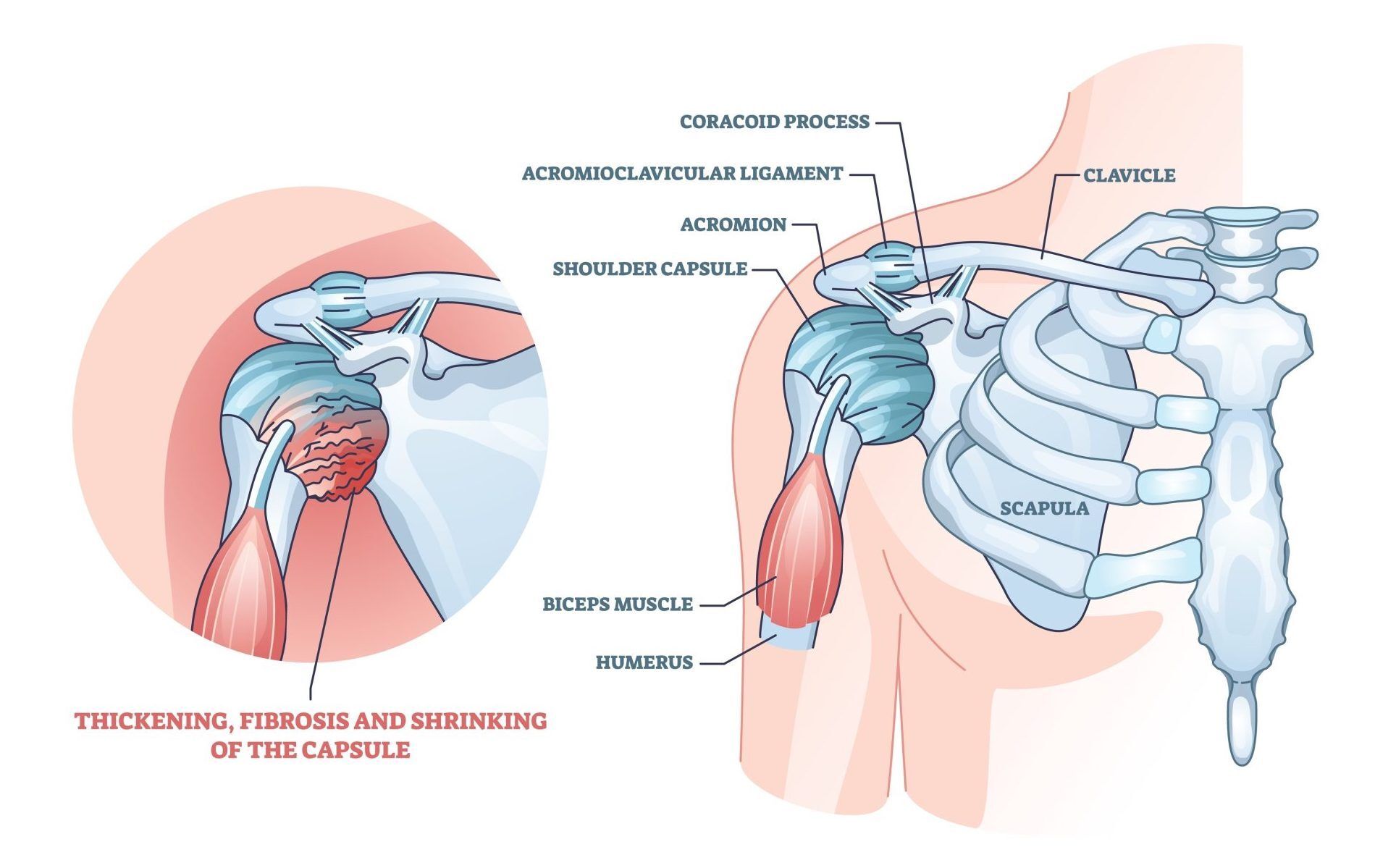
Frozen shoulder, or medically known, ‘Adhesive Capsuilitis’, is a disorder which involves the connective tissue surrounding the shoulder, the capsule. The shoulder capsule is just an envelope of tissue that surrounds the shoulder joint, this shoulder joint capsule can become inflamed which can result in tightening and scarring of the shoulder joint capsule which gives rise to ‘Frozen Shoulder.
Frozen shoulder is synonymous with a stiff shoulder and a reduction in shoulder range of motion, however it is commonly misdiagnosed. Healthcare practitioners often diagnose a stiff shoulder as frozen, despite it not always being the case.

What Is Frozen Shoulder & What Happens During?
True frozen shoulder usually occurs in people between 40-60 years of age and is idiopathic, that is to say it usually comes on spontaneously. It tends to be more common in women and also in people who have diabetes; there has also been a link with thyroid disorders and the drugs that are used for their treatment. Despite these links a direct cause for ‘Frozen Shoulder’ is still unknown.
It is a very debilitating and restrictive condition that can have a very large impact on the lives of those affected. The condition is known to be self limiting, that is to say it resolves itself usually over time without any surgical intervention however on average a frozen shoulder can take up to one and a half years to recover.
The pathology is generally split into three distinct stages:
Freezing – This is the painful stage and mostly when you will present to a healthcare practitioner for accurate diagnosis. The shoulder becomes stiff and painful and you slowly start to lose the range of motion in your shoulder (Can last up to 6 months).
Frozen – This stage is characterized by a decrease in pain (slow) coupled with a more significant restriction in the shoulder (can last 4-12 moths).
Thawing – In this stage the shoulders slowly starts to recover, the shoulder becomes looser and movement gradually returns ( it can last 4-12 months).
Common Symptoms Of Frozen Shoulder
The symptoms occur gradually over time. As highlighted earlier an initial sign is stiffness in the shoulder, however lots of shoulder pathologies also present with a stiff shoulder and therefore that cannot be used to rule in or out a diagnoses of frozen shoulder.
A strong dull ache within the shoulder joint is common with pain usually increased with movement of the joint. Patients will present with difficulty with tasks such as putting on a jacket, tying up a bra, washing their hair, putting on a belt or any other overhead movements first.
As the pathology worsens the level of restriction will increase and normal daily activities can become increasingly difficult and painful. Pain often being something we in Physiotherapy can help with management of as well as advise of when we may need some assistance in reducing pain, be that with medication or injection.
Physiotherapy Diagnosis of Frozen Shoulder
An accurate diagnosis of Frozen Shoulder can be made by your physiotherapist with a comprehensive subjective history and thorough examination. Your physiotherapist may also decide to confirm the diagnosis with an MRI or a diagnostic ultrasound.
As stated above most cases of true ‘Frozen Shoulder’ will take a number of months to recover, others may take even longer depending on how quick the thawing stage can commence.

Treating Frozen Shoulder
The management of Frozen Shoulder can be greatly assisted by your physiotherapist. Your physio can use various techniques to help manage pain and restriction, help decrease the effect on your daily life and effectively monitor any progression or advancement into different stages of the condition. It is important to note however that physiotherapy cannot ‘cure’ the condition, treatment is widely focused at maintaining as much shoulder movement as possible, managing the pain and when in the thawing stage ensuring a speedy recovery and return to normal shoulder movements. The use of corticosteroid injections has been shown to help reduce the effects of the inflammatory stage allowing your physio to work with you sooner. However their effect appears to be best used during the initial inflammatory stage with little or no effect after this.
In severe cases surgery can also be indicated, an athroscopic capsule release has been shown to have a good effect at restoring motion and relieving pain, where the tight capsule is released surgically.
The nature of this condition is different to others where you generally have to wait until the condition wears itself before it resolves. This does not mean you can do nothing to help it though; there are lots of exercises and management techniques that your physiotherapist can assist with to ensure this nasty condition does not have too large an impact on your life.
If you are struggling with Frozen Shoulder, please get in touch today and get some advice from an expert who can help.
Contact us: