
Formula 1 Physiotherapy in Chelmsford
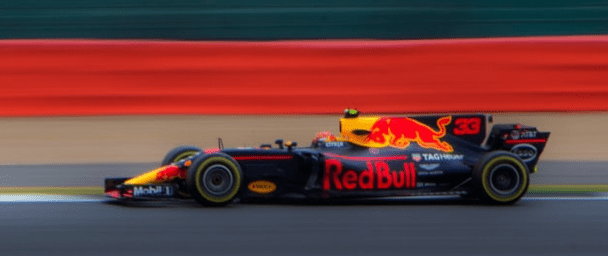
We have always prided ourselves as being Physiotherapists that work at the very sharp end of elite sport. This allows us to transfer our experiences in this realm to the rest of us in the general population and enable us to deal with sports injuries, everyday life injuries and pain much better.
We're lucky to have one of our Physios, Brad working in Formula 1 currently, although unfortunately with no racing starting yet. But, that doesn't mean the drivers aren't staying fit and most importantly using this time to sort out any niggles so they are ready for when the season does start.
Check out the below for a great blog, on what they are up to. The original article link is here, but keep reading for it.
And as always our physiotherapists, Sports Therapists and Sports Massage Practitioners are all on hand to hold online video consultations to assess, guide you through self treatment techniques and plan your rehab journey back to pain free full fitness. To book in you can call us on 01245 895410 or email info@chelmsfordphysio.co.uk
Over to Brad:
It is of course a difficult time at the moment because we have got nothing concrete in front of us, things change very quickly and weekly we are having to look at it and say ‘how do we train? What does it look like?’. There needs to be a balance between ensuring that we don’t decondition but also without knowing when races are going to be the last thing we want to do is push and push and kill enjoyment and motivation. Especially when motivation at the moment for everyone is more about how they are, how their family are, relatives, the outside world. These are tough times which transcends sport and just being there for someone whether it’s emotionally or physically is all the motivation.
However, what we do know is that when the races do come, they are going to come thick and fast. F1 still hope, and we still hope, that we can get a decent race calendar built for when we do return to racing, and this will be motivation in itself for everyone to ensure they do the basic things to keep fit, strong and live well to prepare. A preparation that needs to start now as it will be an unprecedented physical demand no race driver has ever had to endure, with what we expect to be a large amount of back to back races, leaving little or no recovery time.
The Driver Athlete
Training programmes typically follow cycles of off-season, pre-season, in-season and post-season. Athletes are hit hard with long breaks in their training, season or competition and I think in this time F1 drivers even more so, as they had just completed their pre-season, peaking for the first race which, rightly so, did not happen. We now need to go back to an off-season / pre-season mindset and lay the foundations in general cardio-respiratory fitness whilst improving on the strengths and weaknesses of the athlete and as more information on potential season commencement is possible we can increase the intensity.
In F1, as the season approaches the aim is to peak in three key areas: fitness, strength and weight. Hand eye coordination and reaction times are also key components which are honed in a number of different ways and could be another separate topic all together.
Cardio-Respiratory Fitness
F1 drivers are exposed to high temperatures, 3-5 times the force of gravity, carbon monoxide, noise and vibration all which increase the heart rate to around 65-90% maximum for the entirety of a race; core temperature to 38-39.8 degrees celcius; and induce muscle fatigue, burning around the same amount of calories that you would for a half marathon. They have to tolerate all this whilst maintaining a high cognitive load of communicating with the team, pressing over 20 steering wheel buttons, and making continuous high stakes decisions that might not only impact the outcome of a race but also the safety of themselves and others (McKnight et al, 2019).
With this in mind the science has shown as that the fitter drivers experience less cardiovascular and metabolic strain, improving their ability to manage fatigue and maintain their precision and consistency. To achieve this long duration, low intensity cardiovascular training; running, cycling or often a mixture of both is effective; 60-90 minutes at 50-60% maximal heart rate. Slow and steady, still being able to hold a conversation. This can then be interspersed with some maximal heart rate / intensity training to prepare the body and mind for when the heart rate is spiked, particularly during overtaking and lights out.
Strength
F1 drivers need to be strong. Since the rule changes in 2017 allowing for wider tyres and more downforce cars are faster, which means more G-force; Drivers now experience 3-5 times the force of gravity throughout a race, this equates to 3-5 times their bodyweight which they have withstand. We can break the needs into the key areas; Neck, Trunk, Upper and Lower body.
The neck is key and as aerodynamic down force of a race car increases more and more importance will be pinned on isometric neck strength in a drivers training. F1 cars and new equipment like the Head and Neck Support (HANS) device have come a long way in protecting the head and neck but the drivers do still have to withstand extreme forces. To make this more practical, the head weighs approximately 5kg and the helmet 2kg and there is a force of 3Gs on the head and neck, that means the driver is having to withstand a force of 21kg through the neck. This will vary from track to track and crashes will obviously cause much greater G-forces often above 10Gs. Some tracks, like Suzuka, which is fast and technical with a lot of heavy breaking, will put considerable stress on a driver as here they have to withstand 3Gs of lateral force for around 40% of the race, or approximately 32 minutes! (Keedle, 2019) Drivers will often talk about the anti-clockwise tracks as being the hardest on the neck, mainly because they don’t do it much with only five in the calendar, as well as most of the drivers growing up racing clockwise tracks and building some tolerance to the direction. It will also be interesting to see what the bank at Zandvoort has in store!
It is also worth noting that in addition to the performance gains in the race car and the reduced risk of neck injuries, neck strength can prevent sport related concussions (Eckner et al, 2018), which by some accounts is the biggest time loss injury in F1.
To further support this the driver needs to be strong in their trunk and upper body to maintain body position in the seat, work the steering whilst pushing the pedals and keeping the head in the proper position. A driver survey (Ebbed and Suchomel, 2012), albeit in stock cars, found that drivers identified upper body strength and in particular around the shoulder as their top physical demand. Followed by the neck, core and legs. I imagine with the change in cars this now may be the neck followed by the upper body, but it highlights what a key factor it is, and even more importantly if they were to fatigue the knock on implications to performance on race day.
Finally, the lower body must be considered. People often write off the lower body, in the same way they tend to question the athleticism of an F1 driver as essentially racing is a sitting down sport. However strength through the upper limb and core is often borne through having a solid lower base to build from. We also need to consider what the lower limb needs to do; drivers use their right leg to accelerate and left leg to brake. If we use a practical example again, taking Monza, drivers have to brake from 340kph down to 97kph in 2.3 seconds which equates to 6Gs of braking force or up to 78kg of force that they need to produce into break pedal, oh and that is 53 times during the race (Keedle, 2019)
Ayrton Senna sums it up best when he said “You can drive a grand prix car whether you are fit or unfit. But for how long you can drive, how precise, how consistent you can drive, from the stress of the high temperatures, the physical conditions during a race is another thing. You know that’s gonna be tough, you gonna feel tired, gonna have some pain, you gonna lose a lot of liquids, but you know you can do it as good as anybody, if not better, if you are well trained, well-fit. So, if you are not fit your concentration just tends to go gradually away during a race.” (Ayrton Senna: Lifestyle in Brazil, 1992 cited from Ferguson, 2019)
Weight
It would be ideal to finish on that, however we also mentioned weight so a few words on that. Since the 2019 rule changes, weight is not as imperative as it used to be, which is good for the health and physical condition of a driver as we can focus more on being fit and strong. The regulatory threshold for driver, driver kit and racing seat is 80kg. If this is measured as less on the FIA scales then race team engineers must add ballast to the car. Which gives us some wiggle room to add muscle! Due to the current times it will be important for drivers to stay on weight as we have no idea when we will be racing again, therefore keeping in top condition, ready for the call must remain the focus.
Reproduced from https://physiobrad.co.uk/2020/04/05/f1-covid-19-what-now/ with permissions.

When Is Too Much Sport Too Much? The Risks of High Training Loads in Skeletally Immature Adolescents