What is Sciatica?
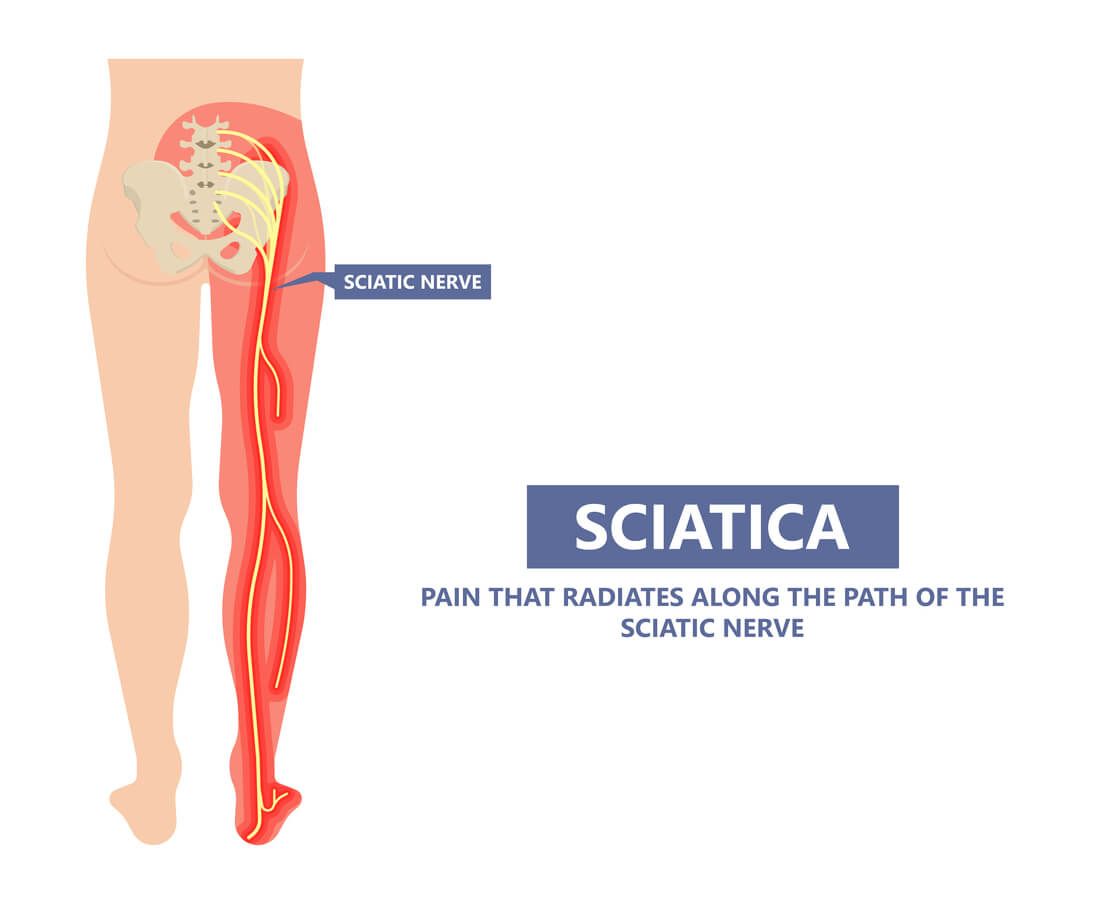
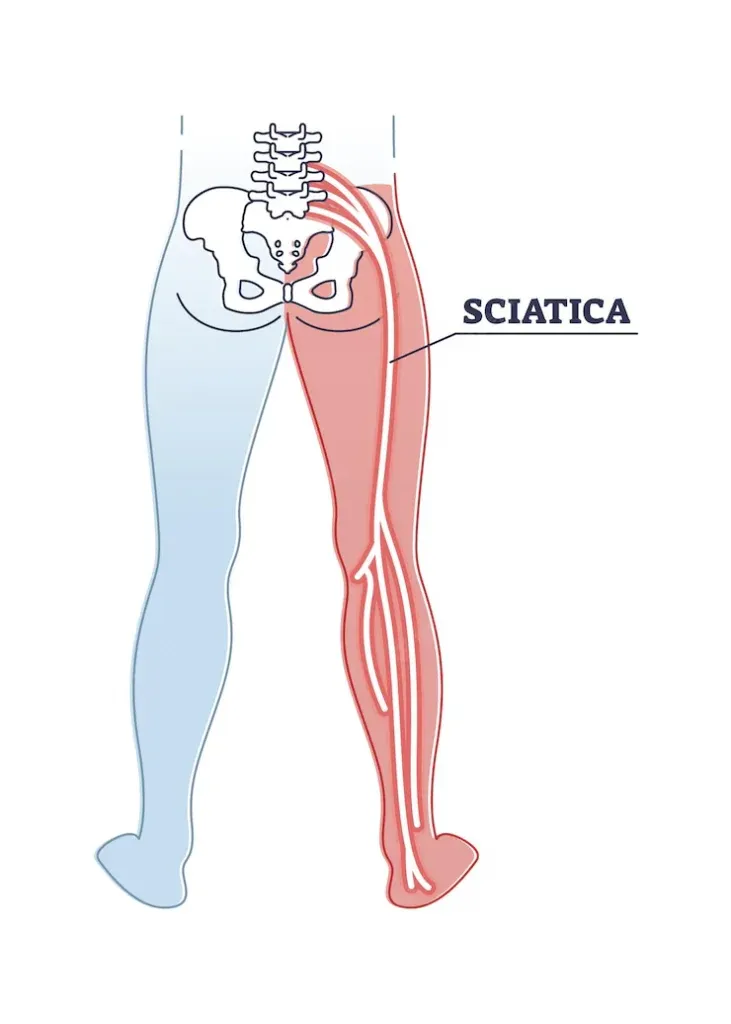
Sciatica is a clinical diagnosis to explain radiating pain in one leg which follows the distribution of the sciatic nerve, with or without associated neurological deficits of parasthesia (altered sensation) and muscle weakness.
A common misunderstanding we see, from a lot is people coming to see us with what they believe is or they’ve been told is Sciatica, when its actually pain from another source.
Back pain is not Sciatica!
Not all leg pain is Sciatica!
Often we see people with referred leg pain coming from muscles or joint in their back or their hip.
The Sciatic nerve branches off the base of the spine, and has nerve roots from L4 to S2.
Sciatic pain is often worse with flexion of the lumbar flexion, where bending sitting and coughing/sneezing aggravate the symptoms.
The sciatic nerve provides sensation the different areas of the leg and power to the various muscles of the posterior aspect of the leg. In some cases when the Sciatic nerve is affected a person can experience altered sensation in an area of their leg (pins & needles or numbness) or a muscle can feel weak, or even experience footdrop is severe cases.
Taking a clear history of the onset, and the symptoms helps a Physio make their diagnosis.
Taking a clear history of the onset, and the symptoms helps a Physio make their diagnosis.
It's very important for a Physio to ask anyone with back pain or Sciatica questions about their bladder & bowel control, as well as the sensation in the saddle area between their legs. These are red flags symptoms, and need to be referred urgently for investigation.
A clinical examination should then be carried out looking at movement of the lumbar spine, as well as a thorough neurological examination including a straight leg raise (SLR ) test, dermatomes (sensation), myotomes (muscle strength) and reflexes.
An MRI scan can help to understand what is causing the Sciatica. An MRI is normally requested if the symptoms don’t improve in the first 6-12 weeks and don’t respond in the way we would expect.The body content of your post goes here. To edit this text, click on it and delete this default text and start typing your own or paste your own from a different source.New Paragraph
The Best Way To Treat/Help Sciatica!
Often medication can helpful to manage the pain to allow the person to keep active and perform the movements and exercise to help them resolve the symptoms.
Manual treatment can be helpful to improve pain and movement, which again helps to improve the recovery.
Selecting the right exercise can really make a difference, some exercises can make the symptoms worse but some can really help to centralise the leg and speed up the recovery.
Bedrest does not help!
The correct education & advice, can be extremely helpful. If the person suffering with Sciatica understands what’s going on, then their self management can be much better and therefore they can help themselves in their recovery.

Most Sciatica resolves over 6-12 week period, but if it doesn’t what do we do ?
As mentioned above, we can help arrange an MRI scan if the symptoms are not improving and refer to a specialist to be assessed for further interventions.
In some cases there are injections, nerve root blocks which can be performed.
Surgery is a very last resort and considered when all conservative options have been exhausted.
If you are struggling with back and/or leg pain, please get in touch today and get some advice from an expert who can help.