The Benefits of Ultrasound-Guided Injections

Chelmsford Physio • March 11, 2026

Ultrasound-guided injections are a medical procedure where an ultrasound machine is used to guide the placement of a needle and injection substance into a specific area of the body. The technique involves the use of high-frequency sound waves that create images of the internal structures of the body, allowing healthcare professionals to visualise the target area in real time. This enables them to accurately identify the optimal location for the injection and confirm the correct placement of the needle and the injection substance.


Ultrasound-guided injections have become increasingly popular in recent years as they offer several advantages over traditional blind/surface-marked injections.
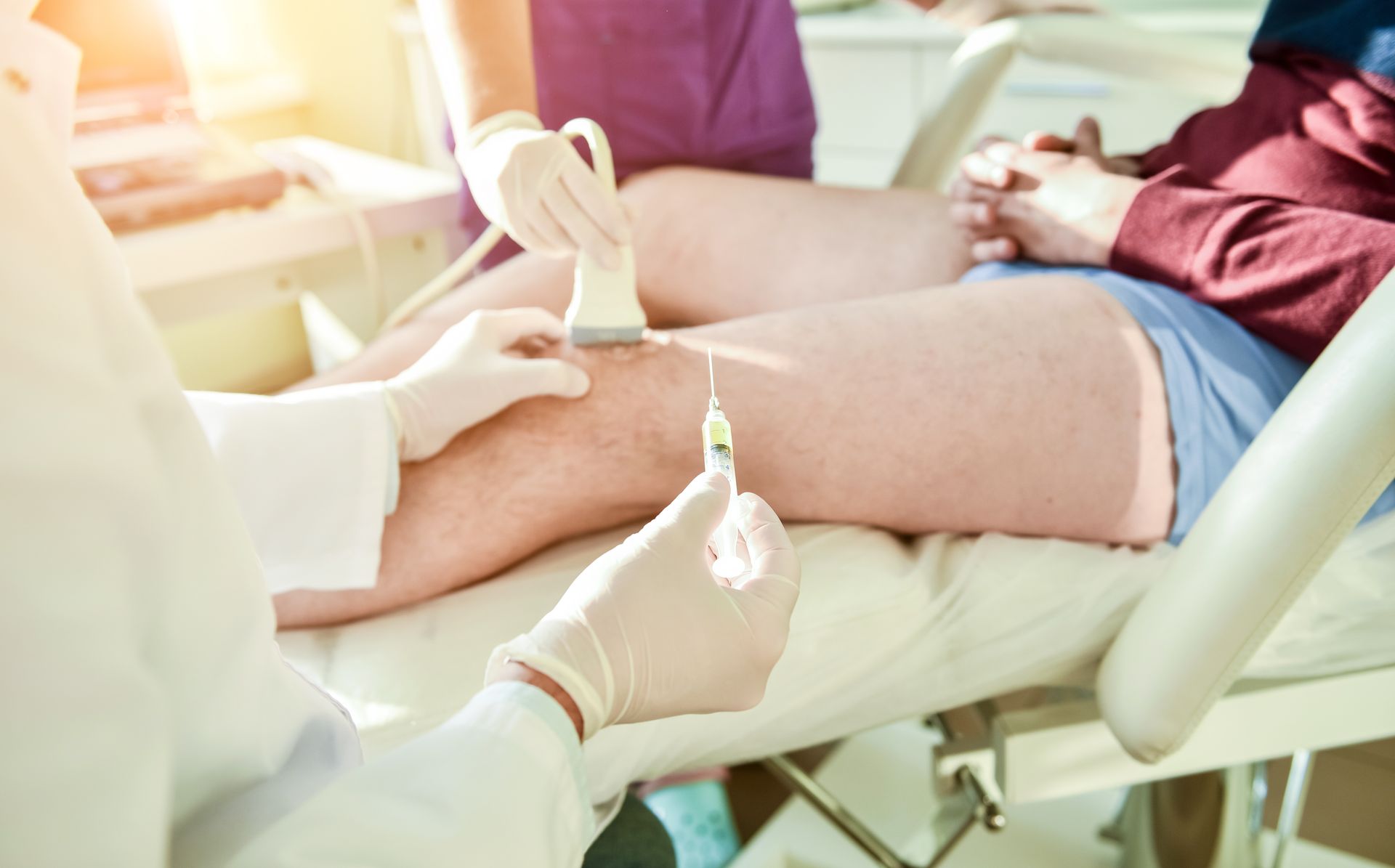


The benefits of Ultrasound Injections include: 


  • Improved accuracy: Ultrasound guidance enables healthcare professionals to visualize the internal structures of the body in real-time, allowing for more accurate needle placement and injection substance delivery.
  • Enhanced safety: By guiding the injection using ultrasound, the risk of tissue trauma, incorrect needle placement, and injection substance delivery is reduced, making the procedure safer and reducing the risk of adverse events.
  • Improved outcomes: Research has shown that ultrasound-guided injections result in better outcomes, including improved levels of pain relief, longer-lasting benefits, and improved post-injection function of the injected area.
  • Reduced need for repeated injections: Since the injection site's location is more accurately determined, the probability of unnecessary injections is reduced, potentially saving time and resources.
  • Increased patient comfort: Ultrasound-guided injections are often more comfortable for patients as the necessary depth of the injection can frequently be decreased, resulting in less pain and discomfort during the procedure.
  • Overall, ultrasound-guided injections offer a more precise, safe, and comfortable alternative to traditional injections, making them an increasingly popular choice in clinical practice.


What can ultrasound-guided injections be used for?

  • Frozen shoulder
  • Tennis elbow
  • Golfer’s elbow
  • Greater trochanteric pain syndrome
  • Osteoarthritis of the knee
  • Osteoarthritis of the hip
  • Morton’s neuroma
  • Carpal tunnel syndrome
  • Plantar fasciitis
  • Shoulder impingement
  • Shoulder bursitis
  • Acromioclavicular joint pain


Chelmsford Physio has developed a unique service directly tailored to the wants and needs of our patients. A one-stop shop, fast, efficient and safe service for patients to obtain pain relieving injections for a broad range of musculoskeletal conditions.


Chelmsford Physio has a specialised team of clinicians who have undertaken extensive training to provide this service. Our clinical specialists have trained as musculoskeletal sonographers (the clinical use of diagnostic ultrasound). They have also completed extensive training to be qualified to prescribe medications independently which means we do not require a referral from your GP.


This allows for our unique one-stop shop ultrasound-guided injection service, whereby patients are able to book to attend a single consultation and received a physical assessment, diagnostic ultrasound and ultrasound-guided injection all in the same visit. This is a highly specialist and innovative service that has been specifically designed to improve patients’ easy access to pain-relieving injections while simplifying patients’ journeys and maintaining a first-class level of care.


Visit us today to book your ultrasound injection session:
Book Appointment Here 


Chelmsford Physio

hello@chelmsfordphysio.co.uk

01245 895410

Riverside Leisure Centre, Victoria Rd, Chelmsford CM1 1FG


By Chelmsford Physio July 29, 2026
Athletes competing in hot and humid environments face significant physiological challenges that can impair performance and increase the risk of heat-related illness. From marathon runners in tropical climates to footballers playing summer tournaments, the ability to tolerate and perform in high temperatures is a critical component of elite sport. As a result, many athletes use structured heat acclimatisation strategies to prepare their bodies for environmental stress.  What Is Heat Acclimatisation? Heat acclimatisation refers to a series of physiological adaptations that occur when an athlete is repeatedly exposed to hot conditions during training. These adaptations typically develop over 7–14 days and help the body improve its ability to regulate temperature, maintain performance, and reduce cardiovascular strain during exercise in the heat. Common methods include: ● Training in hot environments (natural or artificial heat chambers) ● Passive heat exposure (saunas or hot water immersion post-training) ● Adjusting clothing to increase thermal load during sessions ● Gradual exposure to increased environmental temperatures The goal is to safely stress the thermoregulatory system so the body becomes more efficient at dissipating heat.
By Chelmsford Physio July 29, 2026
Ice baths, also known as cold water immersion (CWI), have become a common recovery strategy among elite athletes, particularly footballers. From Premier League changing rooms to Olympic training camps, many professionals immerse themselves in cold water after intense matches and training sessions. While the sight of players sitting in freezing water may seem extreme, there is growing scientific evidence explaining why this recovery method is so widely used. What Is an Ice Bath? An ice bath typically involves immersing the body (or lower limbs) in water between 10–15°C for 10–15 minutes shortly after exercise. The aim is to promote recovery by reducing muscle soreness, inflammation and fatigue, allowing athletes to perform consistently during periods of heavy training or competition. Why Do Footballers Use Ice Baths? Football is a physically demanding sport involving repeated sprinting, jumping, tackling, rapid changes of direction and high-impact collisions. These actions create microscopic muscle damage and trigger an inflammatory response. Cold water immersion is commonly used because it may help: ● Reduce delayed onset muscle soreness (DOMS) ● Minimise post-exercise swelling ● Decrease perceptions of fatigue ● Improve recovery between matches ● Maintain performance during congested fixture schedules For professional footballers playing two or three matches per week, rapid recovery is often as important as training itself. 
By Chelmsford Physio July 29, 2026
The FIFA World Cup is a unique tournament environment: elite athletes compressed into a short, high-stakes schedule, with repeated sprinting, sudden acceleration/deceleration, frequent collisions, and often limited time for full tissue recovery. It’s not surprising that the injury pattern in football tends to cluster around the lower limb—particularly the hamstrings, groin/hip-adductors, knee, and ankle. Across football research more broadly, these are repeatedly identified as the most common locations and/or injury mechanisms, even if the exact percentages differ by competition and injury-reporting method. Below is a physio-focused overview of the most common injury “types/regions” you should expect to see at World Cup 2026, along with practical assessment and management themes. 1) Muscle strains—especially hamstrings (HSI)  Why they happen in tournaments: Hamstring strain injuries (HSIs) are strongly associated with high-speed running and the physical demands of sprinting mechanics. In injury surveillance and football epidemiology, hamstring injuries consistently appear among the most common soft-tissue problems, with meaningful recurrence risk. What a physio will look for: - History: onset during acceleration/sprinting, feeling of “pull,” bruising (sometimes). - CNS/tissue considerations: prior injury, training load spikes, inadequate sprint exposure progression. - Clinical exam: focal tenderness, resisted muscle testing, and functional tests aligned to your local protocols (e.g., pain-free activation and lengthening tolerance). Rehabilitation themes: - Restore capacity for high-speed eccentric/concentric demands (not just range of motion). - Use progressive loading and functional return-to-play criteria to address reinjury risk—because football research highlights that the hamstring is one of the most frequently reinjured regions.