HYROX Dublin: A Physio's Experience of the Ultimate Fitness Challenge
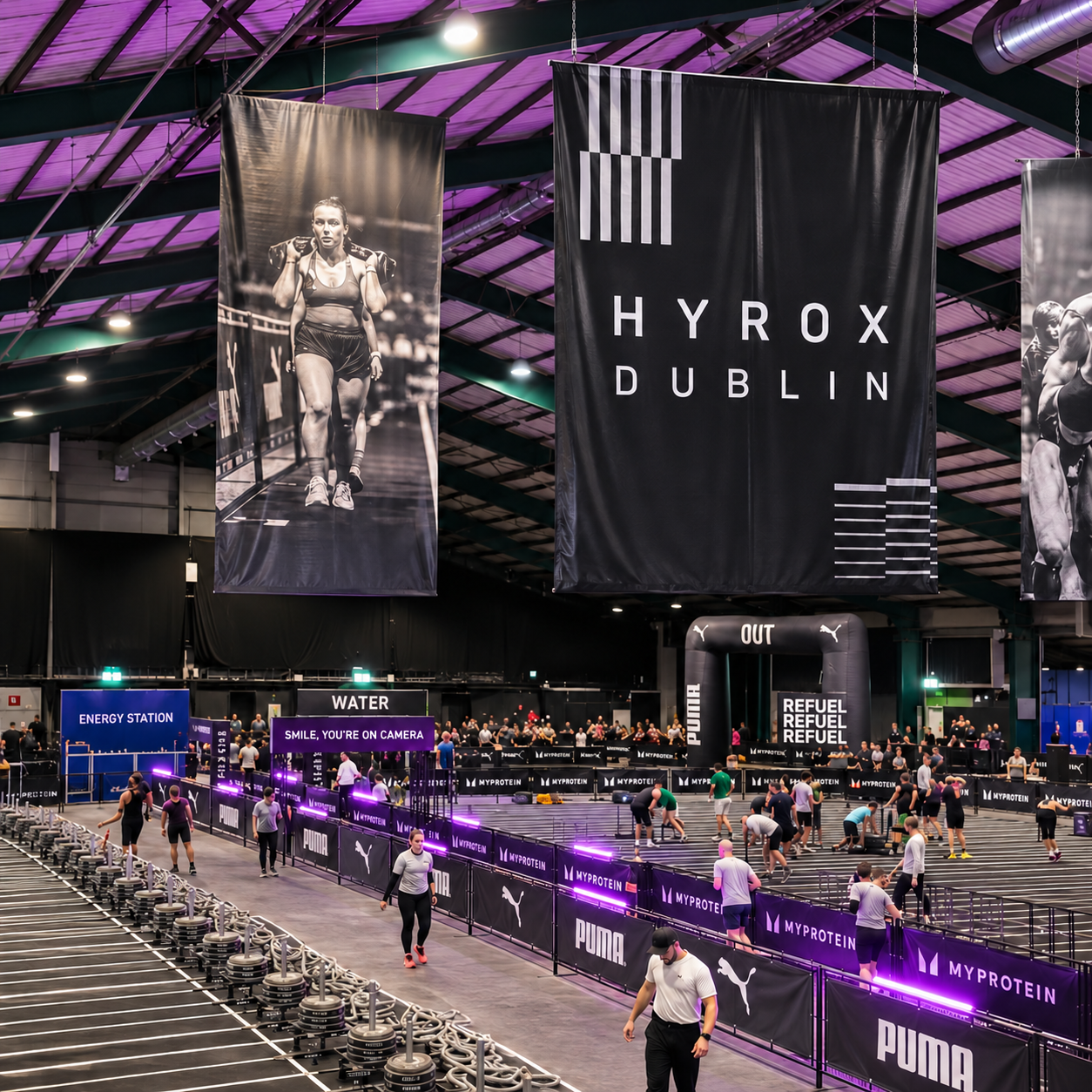
Having competed in my first HYROX event in Malaga back in March with my brother David, we decided it was time to give it another go. This time, however, we were going to take on the challenge individually, competing in the Open Singles at HYROX Dublin. Fortunately, we managed to get ourselves into the same starting wave, which meant we could share the experience together, even if we were ultimately competing against each other!
For anyone unfamiliar with HYROX, it's a fantastic fitness event that combines running with functional strength and endurance exercises. The format is relatively simple: eight 1km runs, with a workout station after each run.
The eight stations include the SkiErg, sled push, sled pull, rowing, burpee broad jumps, walking lunges, farmer's carries and, finally, wall balls.
What's great about HYROX is that it's accessible to a huge range of people. Yes, there are some seriously impressive athletes competing, but there are also plenty of recreational gym-goers simply looking for a new challenge, wanting to test their fitness and, importantly, have some fun. If you enjoy training in the gym and have a reasonable level of fitness, it's something you could realistically work towards.
How did the race go?
Going into Dublin, I didn't feel quite as physically prepared as I had earlier in the year.
The first half of the year had gone really well from a training perspective. I'd been training consistently, had the Chelmsford Half Marathon under my belt, and my running was in a pretty good place.
Over the summer, however, things had become a little more stop-start. Holidays, family commitments and the usual demands of everyday life meant my training wasn't quite as consistent as I'd have liked. My usual routine consists of around three runs a week alongside a couple of gym sessions, but I'd also not attended a specific HYROX class since March or April.
I certainly noticed the difference on race day!
Having competed in the Doubles event in Malaga, I knew roughly what to expect. However, there's a big difference between sharing the workload with someone else and taking on the entire event yourself.
In the Doubles, you can split the workload at each station and give yourself a little more recovery time. In the Singles, there's nowhere to hide!
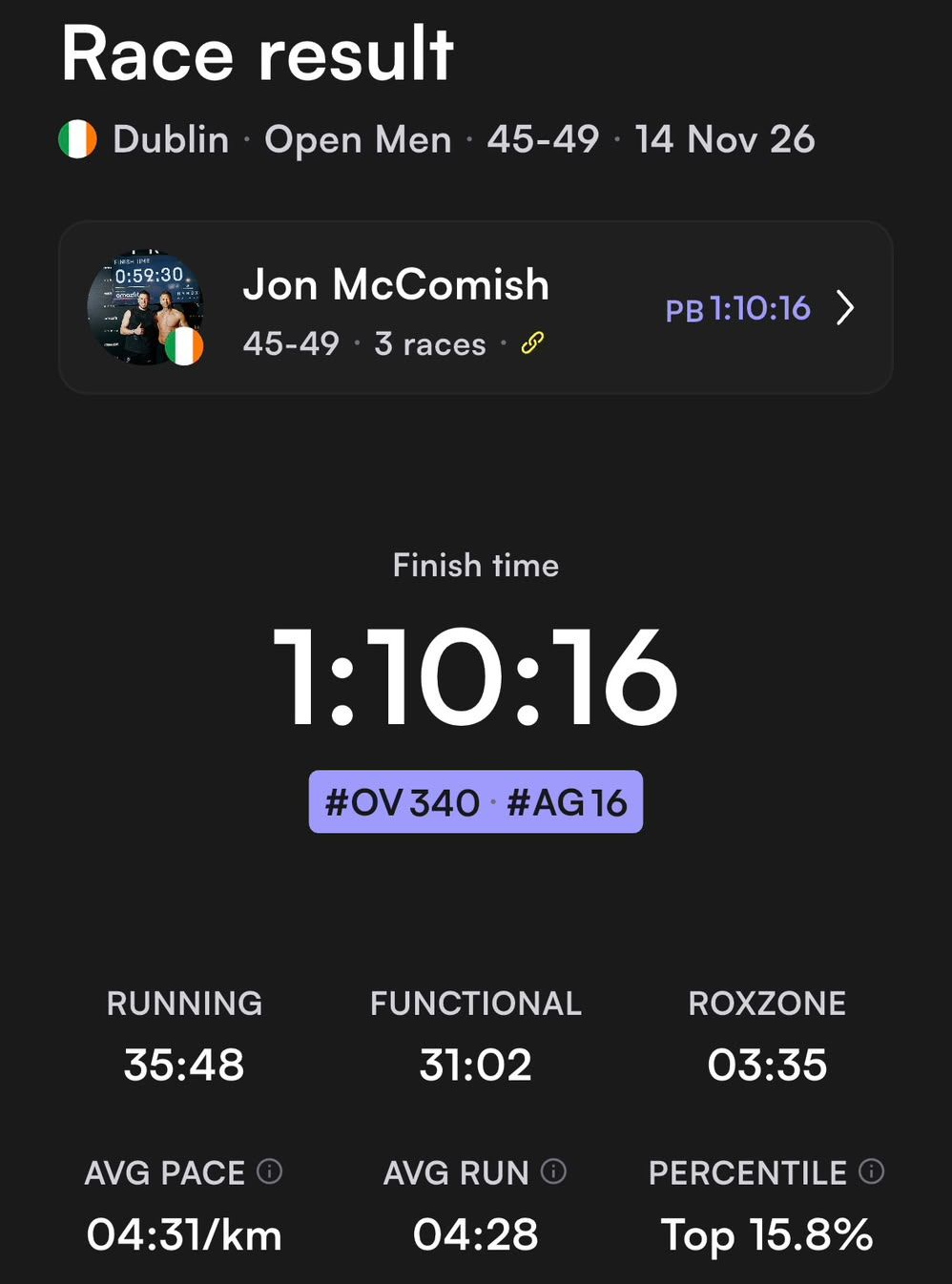
The thing I noticed most was just how heavy my legs felt after each station. I found that the first 300–400 metres of every run were almost about recovery, trying to get my legs moving again before settling into a running rhythm. As a result, my average running pace was considerably slower than I'd hoped.
The sled push and sled pull were probably the two stations that caught me out most. Despite keeping up with my usual running and gym sessions, I hadn't done enough specific HYROX-style training to prepare my body for those particular demands.
I managed the other stations reasonably well, although by the time I reached the wall balls at the end, I was pretty much finished!
I eventually crossed the finish line in 1 hour and 10 minutes, which I was really pleased with. My brother David finished in 1 hour and 8 minutes, so bragging rights definitely went to him this time!
The importance of specific training
From a physiotherapy perspective, one of the biggest takeaways for me was the importance of training specifically for the demands of an event.
It's easy to assume that if you're running regularly and spending a couple of sessions in the gym each week, you'll be adequately prepared for something like HYROX.
However, while general fitness provides a great foundation, the event places some very specific demands on your body. The combination of running, heavy resistance work and repeated transitions between the two requires a different type of conditioning.
The sled push and pull were a good example of this for me. Although I was reasonably strong and aerobically fit, I hadn't done enough specific work to prepare for the repeated effort required.
It's also a good reminder that consistency matters. A few months of regular, structured training can make a huge difference, particularly when you're preparing for an event that tests both cardiovascular fitness and muscular endurance.
Recovery and looking ahead
It took me a couple of days to feel fully recovered, and the area I've noticed most since the event has been my hips.
It's always interesting to experience these events from both sides – as someone competing and as a physiotherapist who regularly works with people managing training-related aches, pains and injuries.
HYROX places considerable demands on the body, so allowing enough time for recovery and gradually building up your training volume is important, particularly if you're new to this type of event.
Despite the sore legs and a couple of days of recovery, I thoroughly enjoyed the whole weekend.
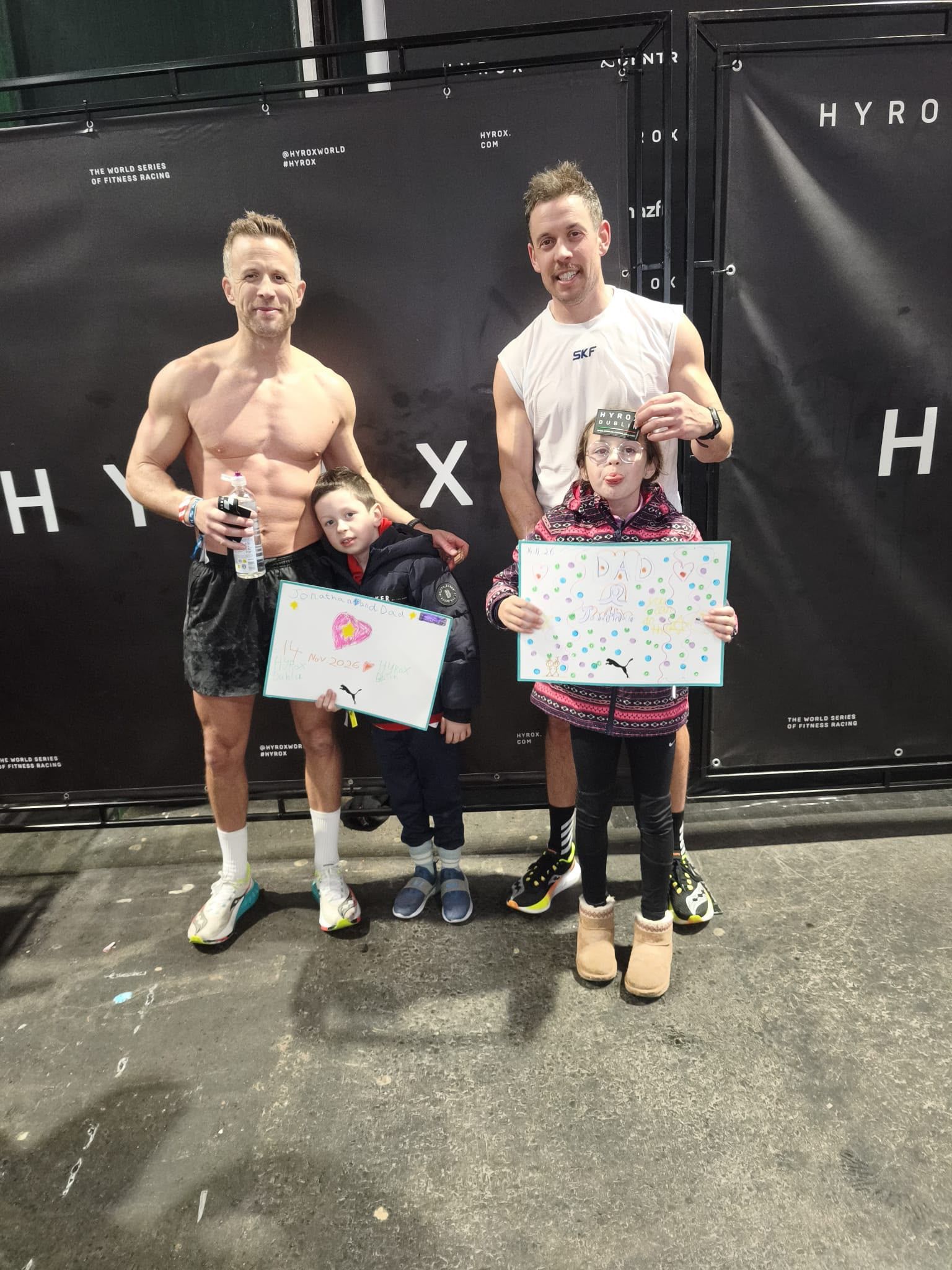
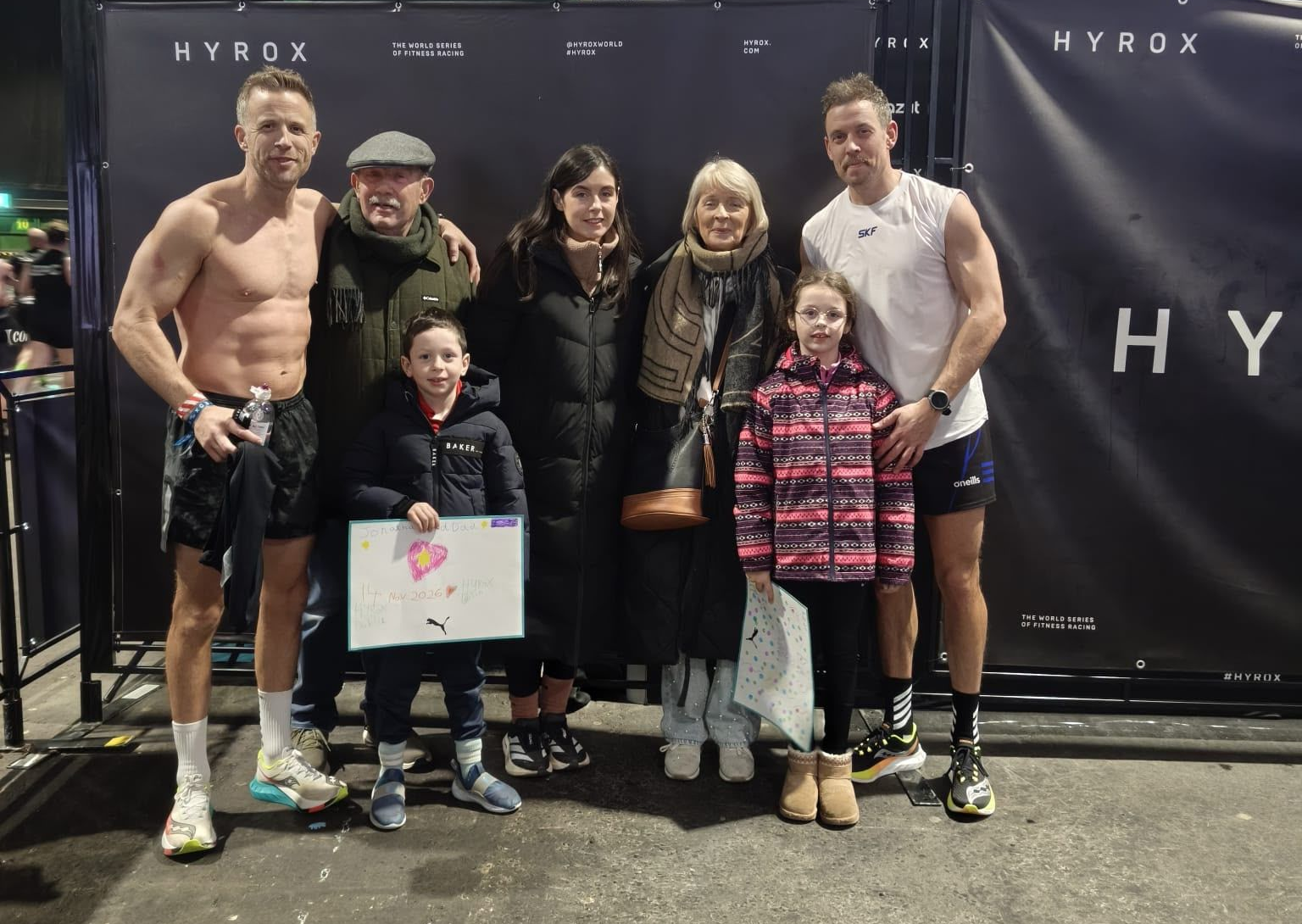
It was also fantastic to be back in Dublin and spend some time with friends and family. My mum and dad came along to watch and cheer us on, while David's wife brought the kids. My niece and nephew were there with their posters and banners, cheering us on every lap, which made the whole experience even more special.
As for what's next? I think we'll be looking to get another event booked for next year. Perhaps another trip to Spain in March or April, giving ourselves a good three-to-four-month training block beforehand. Whether we tackle the Singles again or return to the Doubles remains to be seen. The Singles is certainly brutal, so perhaps sharing the workload again might be the sensible option!
One thing I've realised is that I really enjoy the process of training for an event. Having something in the diary gives me focus, accountability and a reason to commit to my sessions consistently. Without a goal to work towards, it's very easy for everyday life to get in the way.
Thinking about giving HYROX a go?
Whether you're considering your first HYROX event, training for a half marathon or simply looking to take your fitness to the next level, having the right preparation is important.
If you've got a HYROX or another sporting event coming up and would like some advice on training, managing niggles or dealing with an injury, please don't hesitate to get in touch with the team at Chelmsford Physio.
Happy training, and hopefully see you at the next HYROX!