Possibly The Single Most Important Exercises for Any Marathon Runner
Marathon running is a test of endurance, strength, and mental fortitude. For runners preparing for this challenge, focusing on specific muscle groups is essential for optimal performance and injury prevention.
Among these, the calf muscles play a pivotal role. In this blog, we will explore the most effective calf exercises for marathon runners.
Understanding the Role of Calves in Running
Before delving into the exercises, it's crucial to understand why calf strength is vital for marathon runners. Your calf complex muscle will absorb an internal force of up to 8x your body weight on every step you take when running.
Strengthening these muscles ensures better endurance and reduces the risk of injuries such as calf strains or Achilles tendonitis.

Key Calf Exercises for Marathon Runners
1) Seated Calf Raise
The seated calf raise targets the soleus muscle, a vital component for long-distance running.
How to Perform:
- Start with 3 sets of 10-12 reps with both legs.
- As you build strength, aim for 20 reps.
- Once achieving this, progress to single-leg raises to intensify the exercise.
2) Standing Straight Knee Calf Raise
This exercise focuses on the gastrocnemius muscle, crucial for explosive movements.
How to Perform:
- Begin with 3 sets of 10-12 reps using both legs.
- Work up to performing 20 reps.
- Then, move to single-leg raises for a more challenging workout.
3) Standing Bent Knee Calf Raise
The standing bent knee calf raise also targets the soleus muscle but in a different position, offering a comprehensive muscle workout.
How to Perform:
- Start with 3 sets of 10-12 reps using both legs.
- Progress to 20 reps.
- Then, transition to single-leg raises for increased intensity.
4) Loaded Toe Walks
Loaded toe walks help improve balance and strength in the calves.
How to Perform:
- Choose a challenging weight.
- Aim for 30 steps, 15 with the right leg and 15 with the left, moving slowly.
- Repeat for 3 rounds.
5) Isometric Calf Hold on Leg Press
Isometric exercises are excellent for building strength and endurance.
How to Perform:
- Find a challenging weight on the leg press.
- Hold your heel off the plate for 6-8 seconds.
- *Perform this on 3-4 times on both sides, alternating from left to right.
- Repeat for 3 rounds.
Tips for Effective Training:
- Progress Gradually: Avoid overexertion by gradually increasing reps and intensity.
- Consistency is Key: Regularly perform these exercises to see improvements.
- Listen to Your Body: If you experience pain beyond normal muscle fatigue, rest and seek professional advice.
Combining Exercises with Overall Marathon Training
While calf exercises are crucial, they should be part of a broader training plan that includes cardio, strength training, flexibility exercises, and adequate rest. Balancing these elements is essential for a holistic approach to marathon preparation.
Maybe look to work on 2/3 of the exercises above in a strength session. Aim for 2 strength sessions per week, with additional exercises for other muscle groups.
When to Seek Professional Help
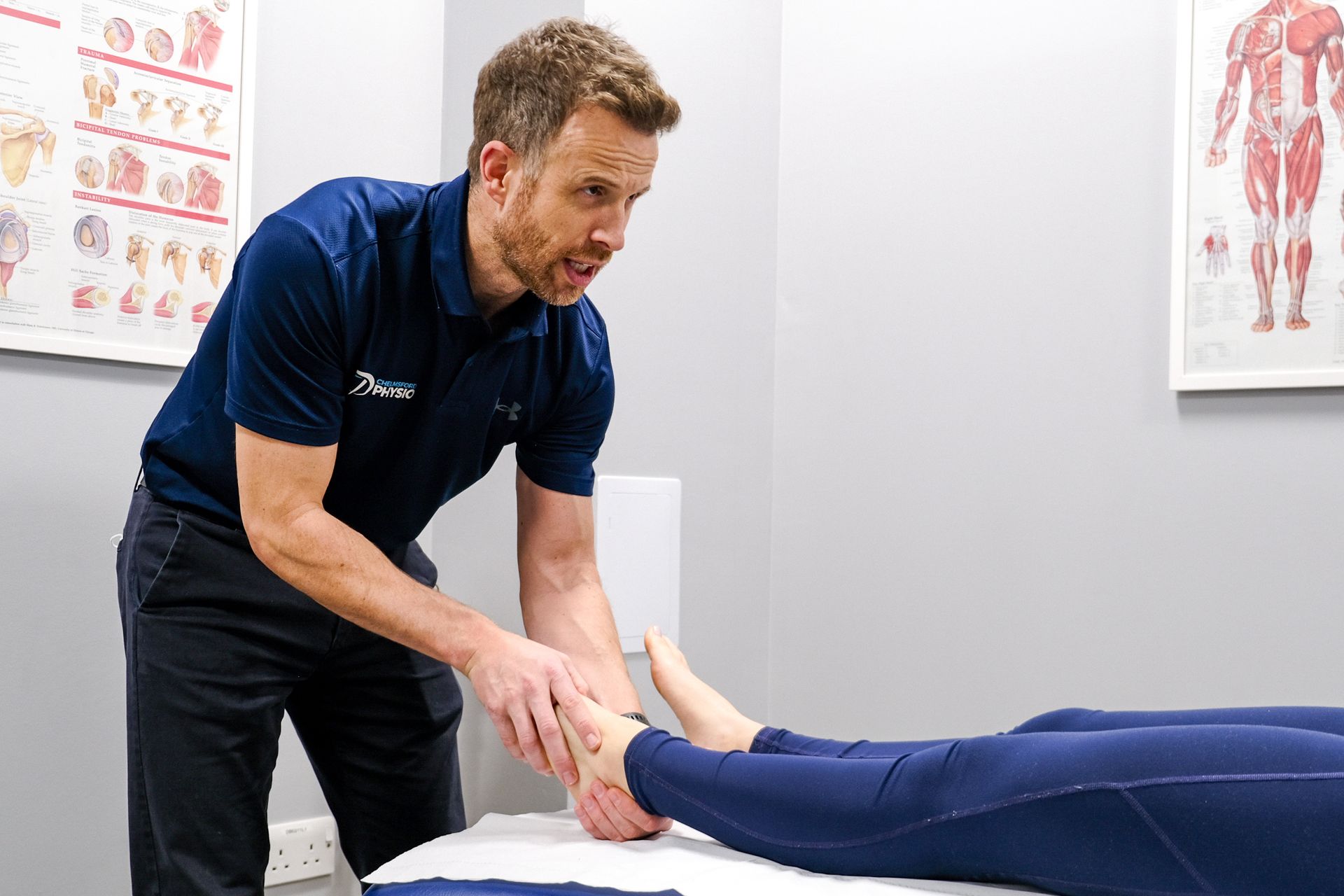
If you're experiencing persistent pain or have concerns about your training regimen, professional guidance can be invaluable. At Chelmsford Physio, we're equipped to assist with tailored advice and physiotherapy treatment.
Conclusion
Strengthening your calves is a crucial aspect of marathon preparation, offering benefits in endurance, speed, and injury prevention. By incorporating these exercises into your routine, you can significantly enhance your running performance.
Remember, each runner's body is unique, and what works for one may not work for another. Therefore, it's essential to tailor your training to your individual needs and capabilities.
For personalised advice and professional physiotherapy services, feel free to
contact Chelmsford Physio. We're here to support your journey to becoming a stronger, more resilient marathon runner.