Osgood Schlatter’s Disease. The Adolescent Knee Pain.

With Society beginning to return to some “normality” kids across the UK are beginning to head back to both school and recreation sport at some pace. Which although fantastic can come with some consequences for some. Being young comes with its advantages, but it also comes with its hurdles. Growing being one of them and we are seeing plenty of it in Chelmsford.
Active adolescents are particularly susceptible to developing a knee condition called Osgood-Schlatter disease. This problem usually arises around the time when a child goes through a big growth spurt when rapid changes are occurring in the bones and muscles. Does your child play lots of sport and sometimes has pain around the front of their knee? Are they currently in the middle of a growth spurt? Then read on…
What it is?
Osgood Schlatter’s Disease, or “tibial tuberosity apophysitis”, is a common condition affecting children and teenagers where the bone at the site of the tibial tuberosity growth plate is inflamed. It is characterised by a gradual, non-traumatic onset of knee pain that worsens rapidly. It most commonly affects physically active children, particularly boys, but any child can develop the condition.
It is a fairly common condition, with estimates that 15-20% of athletic children will experience it at some point, and up to 5% of non-athletic children. Despite this, many parents are unaware of the signs and symptoms, the management on the condition and the long term prognosis for their child.
What causes it?
Osgood Schlatter’s Disease is an inflammation and subsequent pain in the growth plate or “epiphyseal plate” in the tibial tuberosity, which is a bony prominence at the front of the shinbone. Growth plates are found at the ends of developing bones and contain cartilage cells that form into adult bone. This process occurs during a growth spurt in children and is how their bones grow and usually occurs in “spurts” over a two-year period.
When this process is occurring the growth plates are weaker as they have not fully formed into adult bones. In this period of rapid growth, a child’s bones grow faster than their muscles causing them to be become tight. In the instance of Osgood Schlatter’s disease the quadriceps muscles and patellar tendon are pulled tight, resulting in pain and inflammation where it attaches to the weakened tibial tuberosity.
Signs and Symptoms:
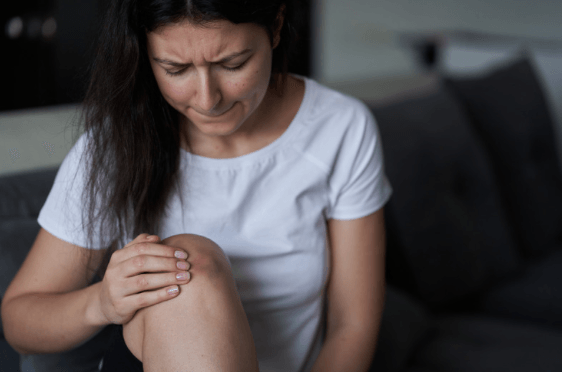
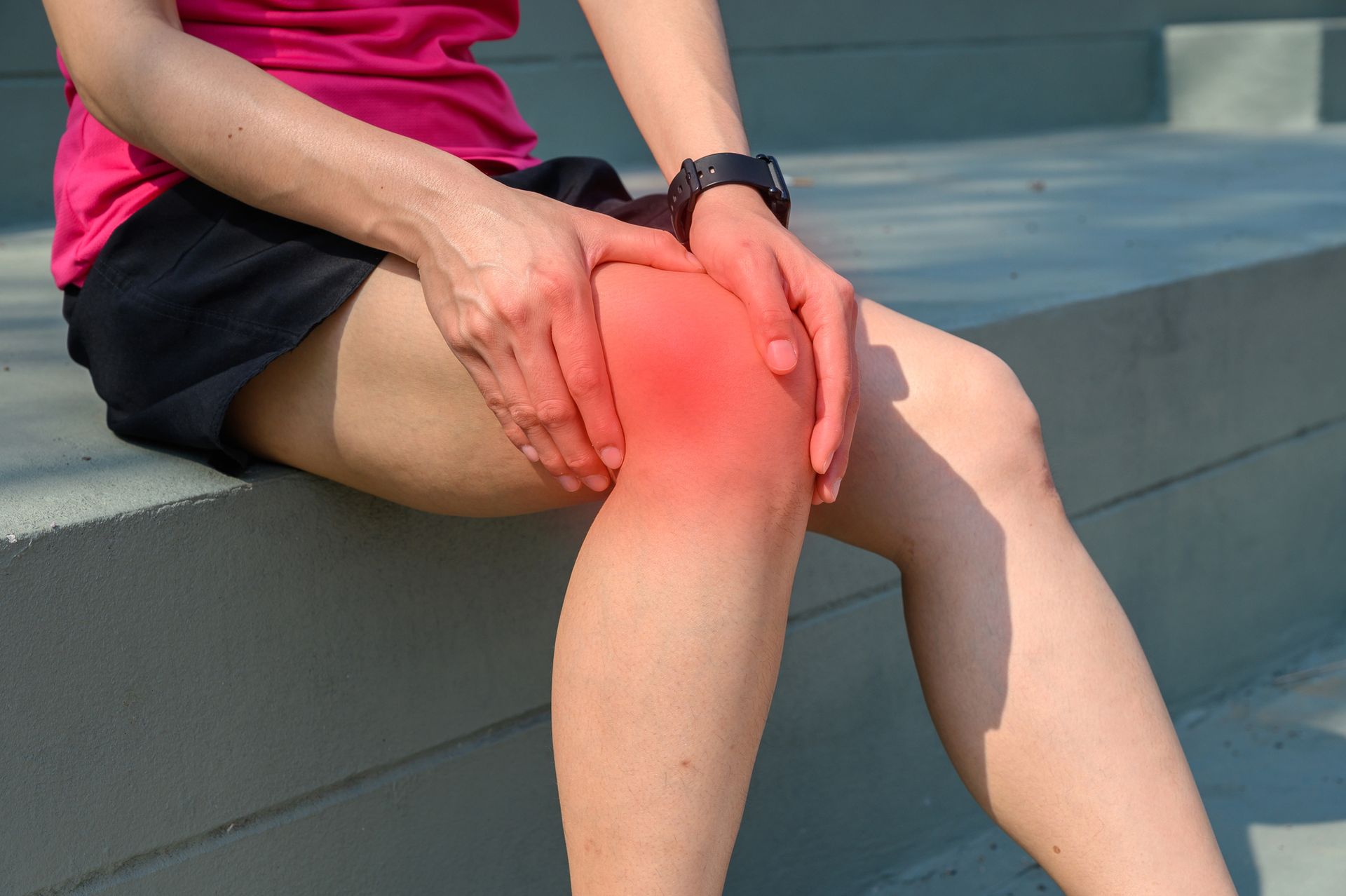
The most common symptom is intense pain just below the front part of the knee, which presents on activities such as jumping, squatting, running, kicking, climbing stairs and kneeling. The pain tends to start off relatively mild and then increase in intensity until the patient is unable to effectively complete the task due to pain. In addition to pain on activity, the tibial tuberosity may be swollen and tender, even at rest.
In 20-30% of cases, children will experience these symptoms in both knees. In later stages, the growth plate itself may enlarge which tends to look like a bump on the tibial tuberosity. This will often stay even after the condition resolves.
Risk factors
The largest risk factor for developing a patella tendinopathy includes acute changes in load for jumping based tasks. Often such load changes include competing in a tournament, increased playing/training frequency, alterations in shoe-wear or alternations in playing surfaces. Weight gain can also be a contributing factor as this places extra load onto the joints. Patella tendinopathy is a highly prevalent condition in younger, jumping athletes, less than 30 years old.
Factors that can contribute to it:
-Active boys from 11-15 years old are the most likely to experience Osgood Schlatter’s Disease, but girls aged 8-13 years can also be affected. If a child plays multiple sports, they are more likely to experience OSD.
-Having chronically tight thigh muscles can also make you more likely to experience Osgood-Schlatter’s Disease.
-Activities involving repetitive, strong quadriceps contractions produce the highest risk. Children who participate in jumping, running, and kicking sports such as football, netball, basketball, soccer etc. are most at risk.
Diagnosis
An accurate diagnosis can usually be made based on the symptoms by a physiotherapist, imaging often won’t be required.
Treatment
The treatment will depend on the findings of the physical assessment, but will likely include pain relief, activity modification, supervised exercise and hands on as appropriate.
Perhaps the most important treatment we can provide is activity modification. Osgood Schlatter’s is a self-limiting condition, which usually means that the pain experienced during activity is directly related to the amount of inflammation at the tibial tuberosity, rather than a sign of ongoing damage being caused. Activity modification involves modifying the duration, intensity, frequency or type of activity the patient undergoes in order to “manage” symptoms. If the pain is quite severe then rest from strenuous activity may be recommended for a short period of time.
Other treatments may involve strengthening of the muscles surrounding the knee, icing, low intensity activity such as walking and swimming. Stretching, massaging and foam rollers may be used to help alleviate some sore from tight quadriceps muscles.
OSD is often a condition we only need to see someone for a short period to help give them the tools for great self management.
Prognosis
As previously mentioned, Osgood Schlatter’s, while painful, is a mostly self-limiting condition. The typical lifespan of the condition lasts for a few weeks to a few months, however in some scenarios people experience symptoms for up to two years.
Once the condition has resolved, most people will not have any ongoing effects, however a small portion of patients will experience an enlargement of the tibial tuberosity, and some will have ongoing discomfort while kneeling on the affected leg. We recommend chatting with one of our team to clarify diagnosis and ensure good ongoing management.