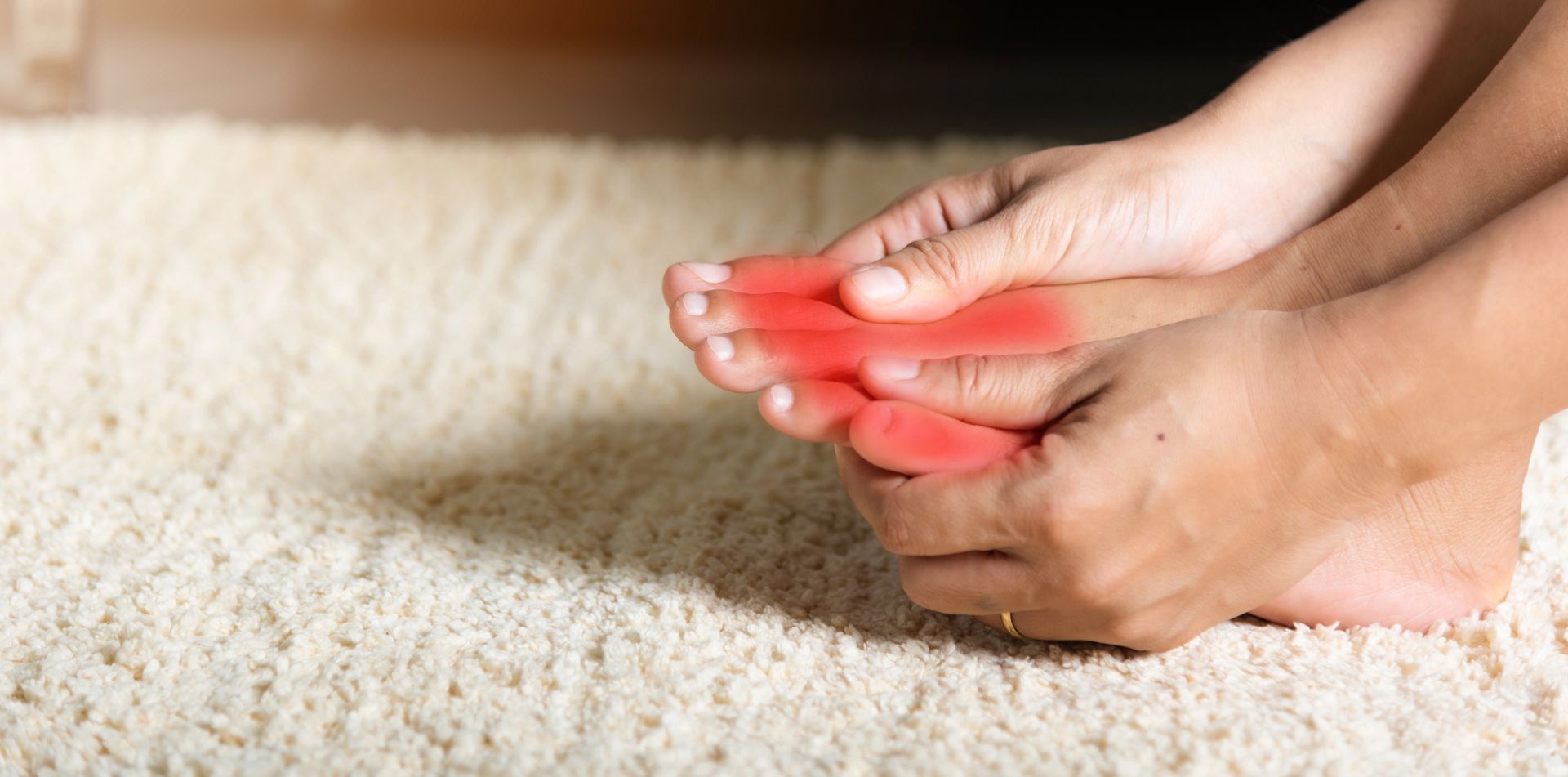
Achilles Tendon Pain and Shockwave Therapy
Achilles tendinopathy is a common injury in sports men and woman, particularly in runners and in those who are generally on their feet for long periods of the day.
Interestingly the change of footwear from winter to summer seems to impact as well, although not proven. It is a strong and thick tendon, however when it comes under repeated stress with little recovery that it cannot tolerate it will break down and become painful.
This makes it weaker, along with the muscle unit (calf muscles) that serve it; and the first line of treatment for achilles tendon pain is a progressive rehabilitation programme which involves loading the muscle-tendon unit, and then the kinetic chain (the rest of the muscles around it; Cook et al, 2018).
Generally this takes 12-16 weeks, along with managing the amount of load the tendon is subject to, and completing a graded return to activity. However, conservative management will prove to be inadequate for a subset of people with these symptoms (Sayana et al, 2007). So what do we do with these people.
In the past maybe injection therapy would be investigated; steroid injections, plasma-rich platelet injections, high volume stripping injections have all been trialled with some positive and some negative outcomes but unfortunately potentially more risk than gain. And then there is surgery.
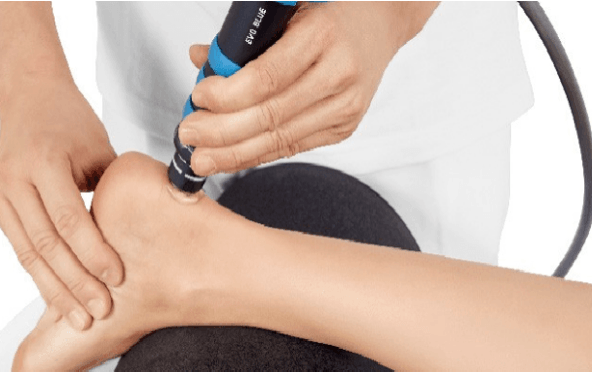
However, now we have another option….Shockwave Therapy, Extra-Coroporeal Shockwave Therapy or ESWT for short is the application of high energy sound waves to human tissue (Chung and Wiley, 2002).
It was originally used in the treatment of renal stones but recently has grown in the musculoskeletal world as more and more studies suggest effectiveness in tendon pain such as the achilles tendon, when other non-operative treatments have failed (Mani-Babu et al, 2015). ESWT has been shown to be a safe and viable option before needing to think about the more invasive therapies such as injections and there have been no risks or major adverse effects noted during its use (Saxena et al, 2011; Schmitz et al, 2015)
The shockwaves create an inflammatory response, reduce the number of sensory free nerve endings, enhance blood flow and trigger the bodies pain control system (d’Agostino et al, 2015).
A number of studies have shown that ESWT is an effective treatment for achilles tendinopathy (Rompe et al, 2007; Rasmussen et al, 2008; Vahdatpour et al, 2018), with the recommendation being at a minimum of three months (Al-Abbad et al, 2013).
A combination of ESWT and the rehab exercises - loading / strengthening was more effective than loading alone (Rompe et al, 2009), and perhaps those under the age of 60 and those with achilles tendon pain for less than 12 months may benefit earlier (Taylor et al, 2016).
Have achilles tendon pain, or any other tendon pain? Think this might help you? Give us a call on 01245 895410 to discuss.
Chelmsford Physio
Riverside Leisure Centre, Victoria Rd, Chelmsford CM1 1FG
When Is Too Much Sport Too Much? The Risks of High Training Loads in Skeletally Immature Adolescents